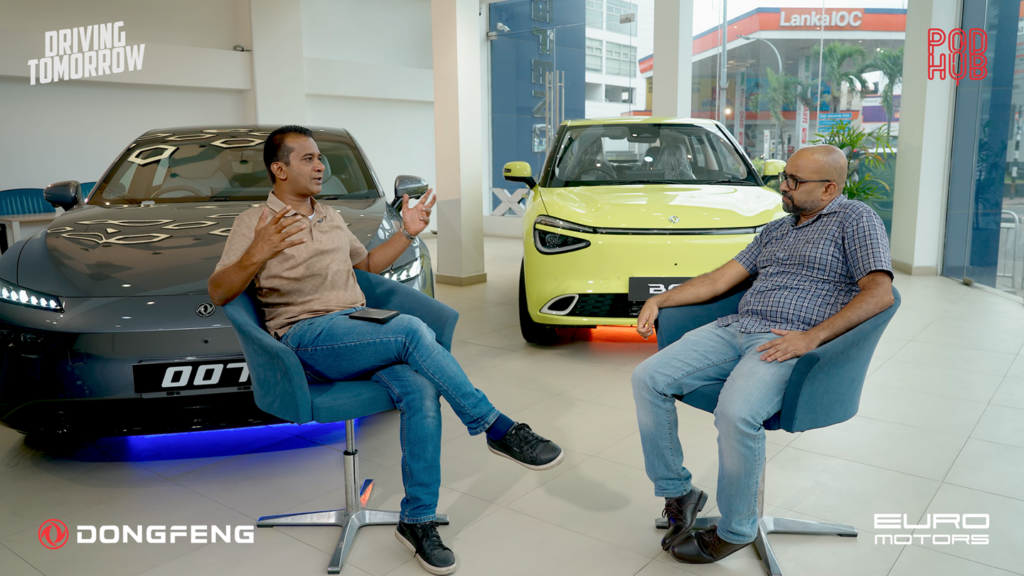
PodHUB and Dongfeng explore Sri Lanka’s EV shift through ‘Driving Tomorrow’ podcast series featuring Omal Balapatabendi
Summary
Sri Lanka’s relationship with mobility has changed significantly over the past few years. What was once a routine part of daily life, became uncertain during the height of the fuel crisis, forcing people to rethink how they travelled, worked, and […]
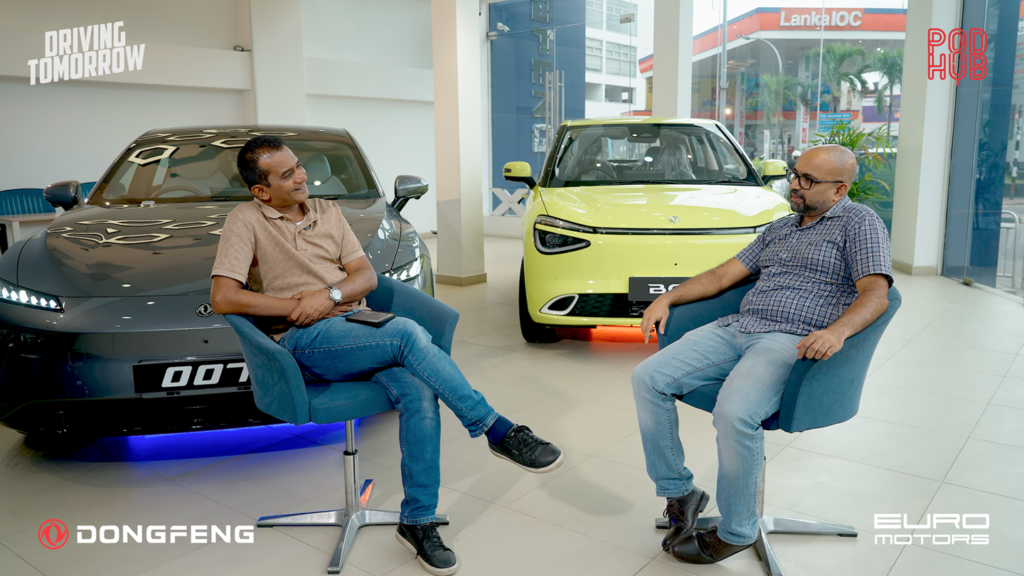
Sri Lanka’s relationship with mobility has changed significantly over the past few years. What was once a routine part of daily life, became uncertain during the height of the fuel crisis, forcing people to rethink how they travelled, worked, and managed their everyday responsibilities. Against this backdrop, a new podcast series hosted by PodHUB and powered by Dongfeng Motor Corporation through Euro Motors is exploring how electric mobility is reshaping the lives of Sri Lankans today.
‘Driving Tomorrow’ is a conversation-led podcast series that moves beyond technical discussions around electric vehicles and instead focuses on the people behind the wheel. Each episode features honest, one-on-one conversations with individuals who have transitioned from traditional combustion-engine vehicles to EVs, sharing how the shift has impacted their lifestyles, routines, and sense of freedom.
The debut episode of the podcast features Omal Balapatabendi, whose story reflects the experiences of many Sri Lankans during one of the country’s most challenging periods. Like countless others, Omal experienced the frustration and uncertainty that came with fuel shortages, spending hours in queues while trying to balance the demands of work and family life. What was once a simple commute ended up a source of stress, requiring constant planning and adjustment around fuel availability.
As someone managing a demanding professional role while also balancing personal responsibilities, the fuel crisis highlighted how dependent daily life had become on an unpredictable system. Everyday activities such as attending meetings, travelling to work, or spending quality time with family were often interrupted by the need to secure fuel. Over time, mobility itself became mentally exhausting, with routines increasingly dictated by uncertainty rather than convenience.
For Omal, transitioning to an electric vehicle initially began as a practical solution to an ongoing problem. However, it quickly evolved into something much more meaningful. One of the biggest changes he experienced was the peace of mind that came with no longer worrying about fuel queues or sudden shortages. The ability to simply charge his vehicle and continue his day restored a sense of control and consistency to his life.
One of the key points Omal shared during the conversation was how deeply the fuel crisis affected him on a personal level. The constant waiting in queues and the uncertainty surrounding day-to-day mobility eventually became unbearable, impacting not only his professional life but also his emotional wellbeing. At one stage, the situation became so difficult that he felt compelled to leave the country, forcing him to spend extended time away from his loved ones. His experience mirrors the difficult reality faced by many Sri Lankans during that period, where economic instability and the fuel crisis disrupted both livelihoods and family life.
He described how the shift changed the way he approached everyday movement altogether. The removal of fuel dependency reduced a constant layer of stress that had quietly become part of daily life for many Sri Lankans. In that sense, the transition was not simply about driving differently, but about reclaiming mental space, stability, and predictability in an otherwise uncertain environment.
What makes Omal’s story particularly relatable is that it is not centred around technology or trends, but around practicality and quality of life. His experience reflects a growing shift in mindset among Sri Lankan drivers, where convenience, reliability, and independence are becoming just as important as performance or status.
At its core, ‘Driving Tomorrow’ is not simply about electric vehicles. It is about how people are adapting to change, recalibrating their lifestyles, and finding smarter ways to move forward in uncertain times. Through real stories and meaningful conversations, the podcast series shines a light on the human side of Sri Lanka’s evolving mobility landscape.
Omal’s story is one of many conversations that will unfold as part of ‘Driving Tomorrow’. Through authentic experiences and honest dialogue, the series offers a grounded and relatable perspective on electric mobility, one that focuses not just on where technology is heading, but on how it is already changing lives today.